Finding a damp patch at the bottom of your backpack is a hiker’s nightmare. Your down jacket is soaked, your electronics are at risk, and your sleeping bag is cold. The culprit? Often it's the very tool meant to keep you clean: your leaking portable bidet.
At Portalo, we don’t believe gear failure should be a "normal" part of the adventure. We spent months analyzing hundreds of user complaints on Reddit (specifically within the r/backpacking and r/vanlife communities) and critical reviews on Amazon. The data is clear: 80% of user frustration stems from two critical flaws: catastrophic leaks during transport and water pressure so weak it’s practically useless.
Anatomy of a Failure: Why Most Travel Bidets Let You Down
Most portable bidets on the market are designed for low-cost production, not for the rigors of the trail. This "cheap-first" approach leads to two fundamental mechanical breaking points.
Problem 1: Material Fatigue (The LDPE Trap)
The majority of "squeeze-style" bidets use Low-Density Polyethylene (LDPE). While it's lightweight and flexible, it suffers from mechanical fatigue. Every time you squeeze, fold, or shove the bottle into a tight pack, the plastic’s molecular structure weakens. Eventually, micro-cracks develop—often invisible to the naked eye—turning your reservoir into a slow-release leak under the slightest pressure from your other gear.
Problem 2: The Failure of Passive Seals
Standard leak protection usually relies on a simple screw cap and a thin silicone washer. This is what we call "passive sealing." It works fine while sitting on a bathroom shelf. But once you're on the move, changes in altitude or the weight of your gear create sudden internal pressure spikes. The seal deforms, the threads shift slightly, and water finds its way out. It’s a design flaw inherent to almost every "squeeze bottle" model on the market.
The Pressure Paradox: When Squeezing Makes it Worse
Weak water pressure isn't just an inconvenience; it’s a direct cause of gear failure. When a device produces a pathetic trickle, your natural instinct is to squeeze harder. This brute force creates a pressure spike the product wasn't calibrated to handle. You end up forcing water through the nozzle seals or stripping the cap threads. Essentially, the very act of trying to make the product work as intended leads to its destruction.
In short: these products are designed to fail the moment you demand actual performance from them.
The Portalo Method: Engineering for Reliability
To solve these issues, we didn't just "tweak" the old design. We started from scratch with a mechanical engineering mindset.
The « Ogive » Mechanical Lock
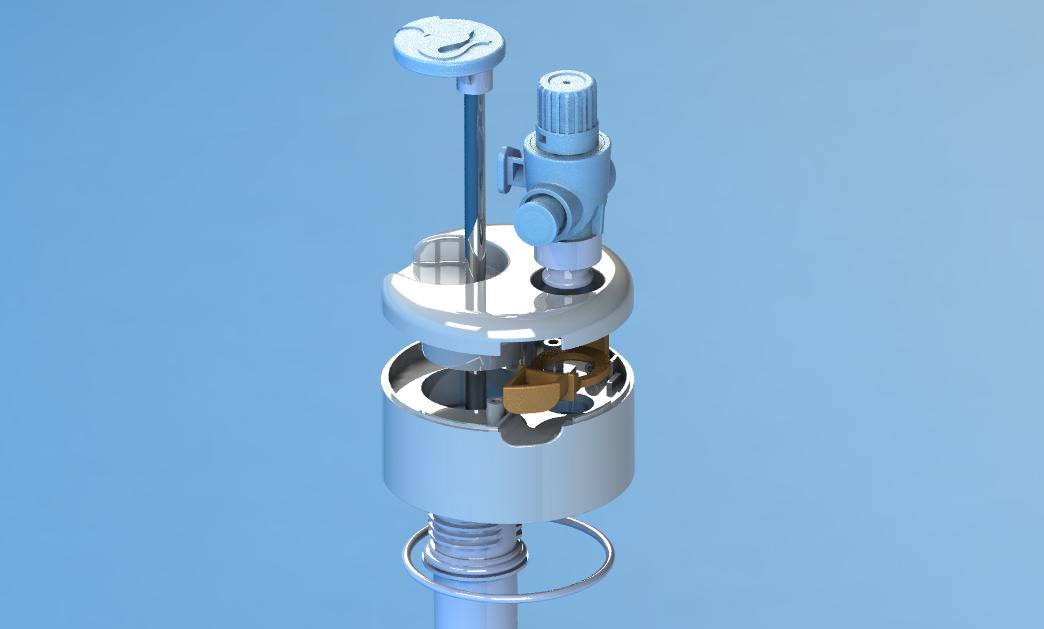
We replaced passive sealing with an active locking system we call the Ogive (nose-cone) lock. Unlike traditional bidets, the flexible hose is retracted inside the reservoir during transport, and the unit is hermetically sealed. To use it, you pull the nozzle, and a cone-shaped component locks mechanically into the cap. This creates a physical barrier that prevents accidental loosening, even when your pack is fully compressed.
Active Internal Pressurization
We eliminated the need to squeeze the bottle entirely. Portalo uses an internal hand pump to pressurize the air *above* the water. This is a game-changer:
- The container is made of rigid, high-impact polymers (ABS and PET) that never deform.
- The energy is stored in compressed air, ensuring a powerful, consistent spray.
- No mechanical stress is applied to the walls or the cap by the user’s hand.
Industrial-Grade Materials
Adventure gear shouldn't be built with kitchen-grade plastics. We use Nitrile (NBR) O-rings, the same standard found in automotive and industrial hydraulic systems. Unlike cheap silicone, Nitrile maintains its mechanical properties across temperature swings and won't get "tacky" or brittle over time. It’s an invisible investment that ensures your Portalo remains as leak-proof in three years as it was on day one.
| Feature | Standard Squeeze Bottle | Portalo System |
|---|---|---|
| Structure | Soft plastic (LDPE) | Impact-resistant rigid PET body |
| Sealing | Passive silicone washer | Active mechanical lock "Ogive" |
| Pressure Source | Hand grip (Variable/Weak) | Air pump (High/Constant) |
Frequently Asked Questions
Can hot water cause leaks?
On soft models, heat expands the plastic and softens the seals, leading to immediate leaks. Portalo is tested to handle warm water without any structural distortion, thanks to its rigid construction and high-grade NBR seals.
Why not just use an electric bidet?
Electronics are the enemy of reliability in the wild. Batteries die, motors seize, and the internal seals on electric models are notorious failure points. A purely mechanical system is robust, easy to clean, and will never leave you stranded in the middle of a trek.
How do I know if I’ve pumped it too much?
Portalo reaches peak cleaning power very quickly. Once you feel a firm resistance in the pump handle, you’re ready to go. Don’t worry about over-pressurizing the unit; we designed the reservoir walls with the same thickness standards as industrial-grade jerrycans. Given its compact size, this makes the structure virtually indestructible by hand.
Stop crossing your fingers every time you pack your bag. Your adventures deserve gear designed for the real world, not the bargain bin. Your comfort, hygiene, and most importantly, your gear's safety depend on it.
Ready for a leak-proof experience? Check out the Portalo high-pressure solution here.