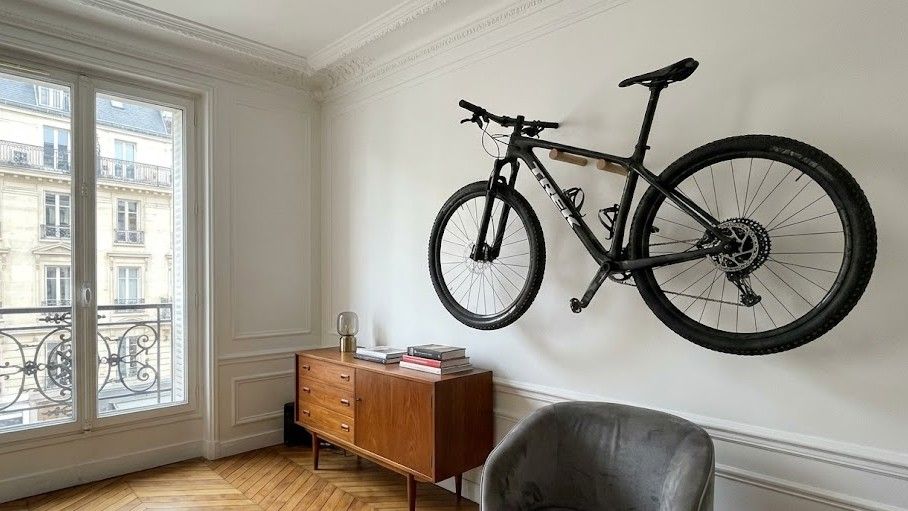
Your apartment is not a car wash. Yet, bringing a carbon frame covered in abrasive grit into a 300-square-foot studio is the reality for thousands of urban cyclists. Every night you leave your chain to dry with that mud, you are losing about $5 in the lifespan of your drivetrain. Apartment bike washing is an operation of precision where every drop of water must be accounted for to avoid turning your living room into a swamp.
During my time working in professional bike shops, we faced an absurd challenge: maintaining high-end machines with no direct water access. In that environment, I realized that water volume is the enemy of mechanics. Drenching a bike to clean it is a rookie mistake that eventually flushes the grease out of your internal bearings.
Engineering for the Entryway Closet
I spent three years at my engineering desk at ESIEE Paris designing the tool I was missing. I wanted a device capable of delivering surgical pressure, but with strict real-world constraints:
- Zero Electronics: No batteries to charge for 2 hours, no motors to burn out. 100% mechanical reliability.
- Ultra-Compact Format: Roughly the size of two stacked soda cans. It needs to fit in a drawer or clip to a gear bag.
- Lightweight: Something you forget is in your backpack, yet powerful enough to blast sand out of cassette cogs.
After 11 prototypes, Portalo was born from this vision: replacing volume with precision.
The Mechanical Cost of Neglect
Dirt acts like liquid sandpaper. If you don’t rinse critical areas after a wet ride, grit infiltrates your fork seals and bottom bracket bearings. A seized hub or a worn-out bearing kit often costs over $100 to replace. By investing ten minutes after every ride, you earn an immediate return on your equipment investment.
Traditional "solutions" like the bathtub are a nightmare: chain grease permanently stains enamel, and sand will eventually clog your pipes. You need a calibrated jet that dislodges grime without ever jeopardizing the integrity of the machine.
Tutorial: The Surgical Rinse Method
To pull off an indoor bike wash without a trace, forget the "bucket and sponge" approach. Here is the pro protocol for a "like-new" drivetrain:
- Fill your Portalo reservoir with 10 oz of water and a shot of concentrated bike wash (or biodegradable degreaser). Pump the handle to pressurize the system.
- Spray the foamed water directly onto the cassette and chain. Use a stiff-bristled brush to scrub the links while back-pedaling. The flexible hose allows you to reach the back of the derailleur pulleys effortlessly.
- Wrap a thick microfiber cloth around the base of the area you are cleaning (the chainstay or fork). It will absorb any excess liquid instantly.
- Use the remaining 2 oz of water to flush out the sludge with the precision nozzle. The targeted jet prevents any overspray on your hardwood floors or carpet.
E-Bikes: Safeguarding Your Electronics
Washing an electric bike requires extra caution. High-pressure car wash wands force water behind motor seals and into battery connectors. With controlled manual pressure, you can rinse cooling fins and sensitive points with millimeter precision, without risking a short circuit or premature oxidation.
Protection and Lubrication
Once the critical points are rinsed, bike lubrication must follow immediately. Because you used very little water, you preserve the internal grease that wasn't flushed out. Your chain, now free of abrasive sand, is ready for a fresh drop of lube, extending its life by thousands of miles.
Nomadic Hygiene Beyond the Bike
The Portalo design was built for cyclists, but its 360-degree magnetic mount makes it indispensable elsewhere. It’s a pocket faucet for rinsing shoe cleats before getting into your car or ensuring perfect hygiene while camping. We even applied this logic to cleaning muddy dog paws to save car interiors.
Cleanliness in an apartment is about technique, not water volume. Discover Portalo and adopt the surgical rinse method today to preserve your gear and your security deposit.
Urban Cyclist FAQ
- Is 12 oz ( 350 mL) really enough? For the drivetrain and pivot points, yes. It provides exactly enough time for a precision rinse. For a mountain bike covered in thick mud, two refills are recommended.
- Can I put degreaser inside? Absolutely. The high-grade PET reservoir is built to handle water/cleaner mixes to increase the chemical efficiency of the spray.
- Will it leak in my gear bag? No. The internal locking mechanism guarantees a 100% watertight seal during transport.