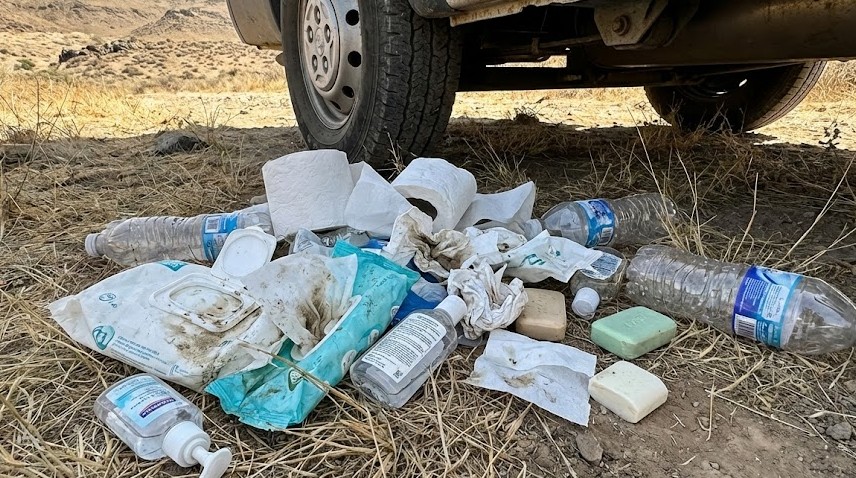
Whether it’s a quick diaper change, a post-workout refresh, or a night at a campsite, wet wipes have become the ultimate convenience. But behind that "fresh" scent lies a harsh reality: you are rubbing a plastic sheet soaked in chemicals onto your skin. Most wipes fail to provide the hygiene your body deserves and represent a silent ecological disaster.
According to the Marine Conservation Society, 90% of wet wipes contain plastic resins like polyester or polypropylene. These never truly biodegrade, breaking down into microplastics that pollute our soil and oceans for centuries.
The Parent Persona: The Diaper Rash Alert
As a parent, your baby’s skin health is your priority. Yet, the systematic use of wipes is often the primary cause of chronic diaper rash. Unlike washing with water, wipes involve no rinsing. You are leaving a cocktail of preservatives, surfactants, and synthetic fragrances on your child’s ultra-sensitive skin.
A study published on NCBI highlights that failing to rinse disrupts the natural pH of the skin microbiome. This chemical aggression weakens the protective barrier, leading to painful inflammation. Pure pressurized water is the only neutral solvent capable of flushing away fecal bacteria without stripping the skin. Switching to water + reusable cloths is more than an eco-friendly choice; it’s a medical one for your child’s comfort.
The Illusion of Clean: Why Wipes Fail
Wipes don’t "clean"; they smear. They spread dirt and bacteria across a larger surface while leaving a sticky film that attracts more dust. For true hygiene, mechanical action must be followed by evacuation—that is the role of pressurized water.
For hikers and vanlifers, the problem becomes logistical. Since burying these plastic sheets is forbidden, you have to pack out your dirty waste for days. With the Portalo portable bidet, you replace pounds of disposables with a durable tool that uses the water you are already carrying.
The Winning Ecosystem: Pressure + Textile
A washcloth is a great eco-friendly alternative, but without a tap, it’s hard to soak and impossible to rinse properly. This is where Portalo engineering comes in:
- Instant Soaking: The pressurized jet wets your cloth instantly using a fraction of the usual water.
- Active Rinsing: The jet’s kinetic energy flushes out the cloth (or the skin directly) to remove residue—something a simple water bottle cannot do.
- Chemical-Free: For a deep clean, combine pressure with Castile or Aleppo soap, which are biodegradable and free of endocrine disruptors.
| Criteria | Standard Wipe | Portalo System |
|---|---|---|
| Action | Friction (spreads bacteria) | Pressure (evacuates bacteria) |
| Residue | Sticky chemical film | Zero residue (pure water) |
| Health (Baby/Skin) | Diaper rash risk | Irritation prevention |
| Waste | Plastic (450 years) | Infinitely reusable |
"True cleanliness leaves no trace. Not on your baby’s skin, and not in nature."
Ready to ditch the plastic for the power of water? Discover the Portalo solution.